A World Class Collection in the South
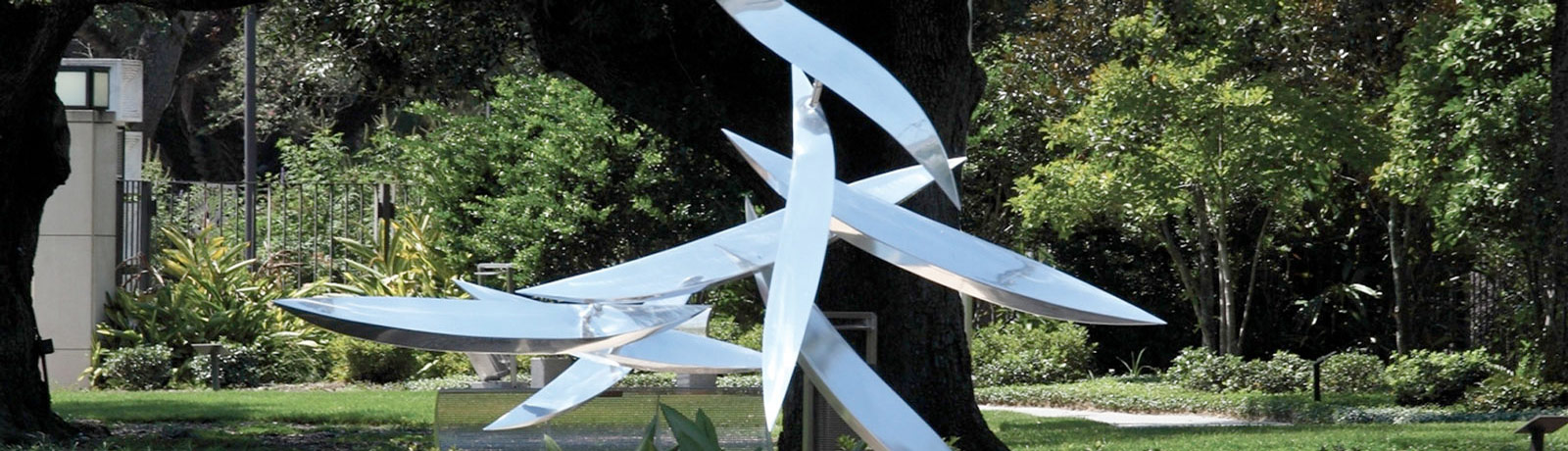
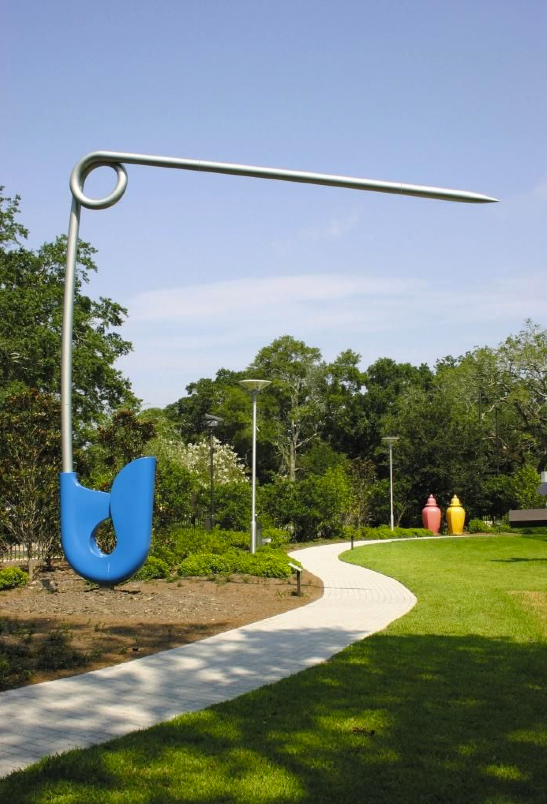
The New Orleans Museum of Art, the city’s oldest fine arts institution, has a magnificent permanent collection of almost 40,000 art objects. The collection, noted for its extraordinary strengths in French and American art, photography, glass, and African and Japanese works, continues to grow. The five-acre Sydney and Walda Besthoff Sculpture Garden at NOMA is one of the most important sculpture installations in the United States, with over 60 sculptures situated on a beautifully landscaped site amongst meandering footpaths, reflecting lagoons, Spanish moss-laden 200-year-old live oaks, mature pines, magnolias, camellias, and pedestrian bridges.
NOMA continues to exhibit, interpret and preserve works of art from ancient to modern times. Paintings, drawings and prints, and decorative arts survey the development of Western Civilization from the pre-Christian era to the present. Reflecting its rich historic and cultural heritage in New Orleans, NOMA has formed a comprehensive survey of African and French art. Among its French treasures is a group of works by the French Impressionist Edgar Degas who visited maternal relatives in New Orleans in the early 1870s and painted just 20 blocks from the Museum. NOMA’s collection of works by masters of the School of Paris includes paintings and sculptures by Picasso, Braque, Dufy and Miro, among others.
NOMA has developed a unique Arts of the Americas collection, surveying the cultural heritage of North, Central and South America from the pre-Columbian period through the Spanish Colonial era. This collection is especially rich in objects from the great Mayan culture of Mexico and Central America, and in painting and sculpture from Cuzco, the fabulous Spanish capital of Peru. An important part of the Museum’s display of American art is a suite of period rooms featuring 18th and 19th century furniture and decorative arts
As it has for a century, the New Orleans Museum of Art continues to be a gathering place for all those seeking to share the beauty of this extraordinary collection or world art and learn from it. NOMA engages, educates and enriches the diverse populations within, and drawn to, the New Orleans area.
European Art
Italian Collection French Collection Impressionism to 1945 Dutch and Flemish Collections
The Italian Collection
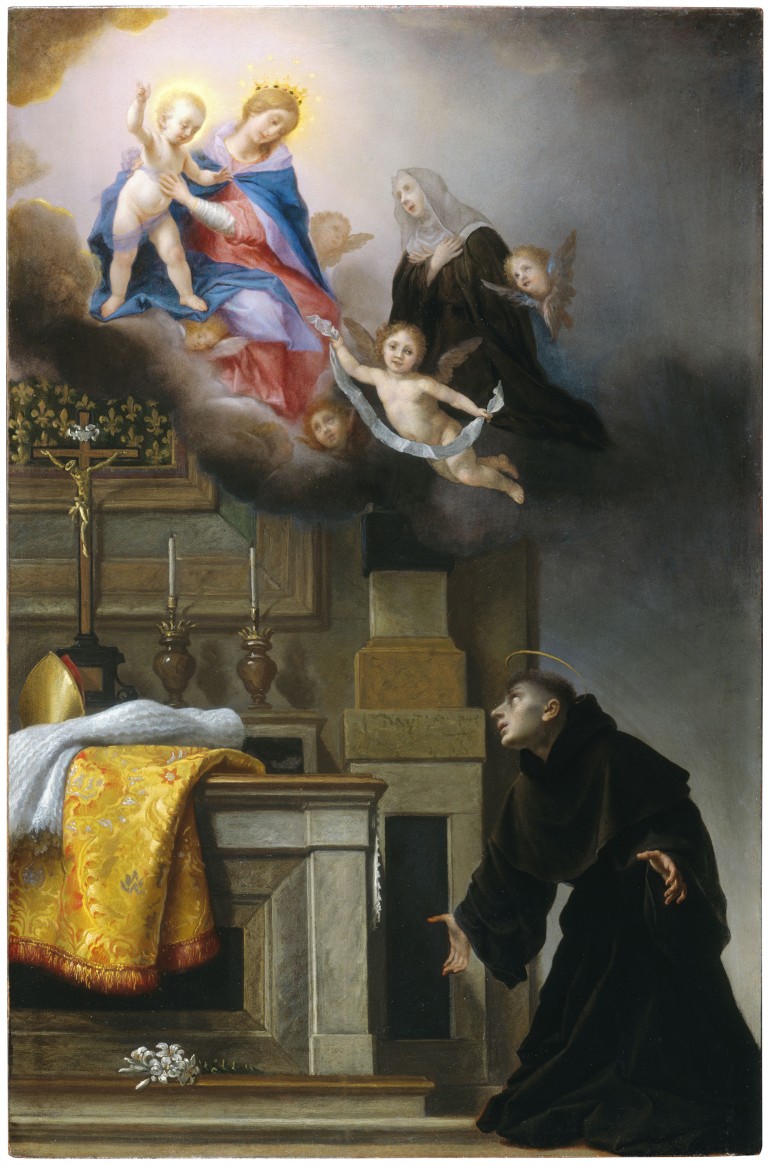
NOMA’s Italian painting collection from the early Renaissance through the 18th Century is particularly distinguished. A group of panel paintings in tempera with gilded backgrounds, some as early as the 1300s, includes Bartolomeo Vivarini’s altarpiece of the Coronation of the Virgin.
Although oil painting was invented in the north of Europe, it was the Venetian painters who first understood the potential of this new technique for brilliance of color, light and texture. Portraits by Lorenzo Lotto and Tiepolo show off this virtuosity with oil paint, as well as an insight into the subjects of the portraits that carries across the centuries.
From Genoa comes Luca Cambiaso’s sumptuous treatment of the female nude in the Allegory of Venus and Earthly Vanity. The melodrama of Death Comes to the Banquet Table by Giovanni Martinelli is heightened by the sharp contours and clarity of form that were typical of Florentine painting of the 17th Century.
The French Collection
NOMA’s emphasis on the French painting collection reflects the traditional taste of New Orleans which was originally a French city. Landscape paintings, from the sublime sunset of Claude Lorrain’s Ideal View of Tivoli to the fashionable Park of St. Cloud by Hubert Robert, has been an abiding interest of French artists. Charming rococo scenes by François Boucher and Charles Joseph Natoire are visitor favorites.
By far the largest and grandest painting in these galleries is Élisabeth-Louise Vigée Lebrun’s Portrait of Marie Antoinette, Queen of France, which was commissioned by the King’s younger brother, the Comte d’Artois. Marie’s husband, King Louis XVI, is resplendent in Antoine-François Callet’s portrait documenting the last years of the ancien régime.
NOMA is fortunate to have an important oil sketch for Baron Gros’s most famous painting, Pest House at Jaffa, which depicts a controversial episode of Napoleon’s Egyptian campaign. Always aware of the propagandistic power of his image, Napoleon reportedly insisted that the artist present him in a more heroic pose in the final version.
French fascination with an exotic vision of North Africa is represented in genre paintings of chess players and snake charmers by Gérôme. His contemporary colleague William-Adolphe Bouguereau was immensely popular for works like Whisperings of Love in which is one of NOMA’s most popular paintings.
Impressionism to 1945
NOMA has a personal tie with Impressionist art, especially because of Edgar Degas’ family connections with the city. Degas spent a few months his mother’s native city of New Orleans in the winter of 1872-1873. In fact, you can visit the Degas House, which is near NOMA at 2306 Esplanade Avenue. During his stay, Degas painted a portrait of his cousin Estelle Musson, who was nearly blind, as she arranged flowers in a vase. This painting is currently on display on the second floor of NOMA.
Degas’ Impressionist colleagues, including Monet, Pissarro and Renoir, are also well-represented in NOMA’s collection. Paintings by their immediate successors, such as Post-Impressionist artist Gauguin, also grace the walls of the Impressionist galleries.
In addition to the Impressionist gallery, Fauves, Expressionists, Cubists, and explorers of abstraction offer one of the most exciting aspects of the collection. Outstanding canvases by Braque and Picasso, Vlaminck, Derain, Roualt, Chagall, Kandinsky and Kirschner, are on view. Complementing these is a choice group of works by their Spanish contemporaries, Juan Gris and Joan Miró.
The Dutch and Flemish Collections
Dutch and Flemish artists were celebrated for their command of detail and faithful depiction of nature. This can be seen in Marinus van Reymerswaele’s The Lawyer’s Office, which refers to an actual lawsuit filed in 1526. The documents of this court case are recorded with amazing precision on the background wall.
Also in this vein of realism is the Serpents and Insects by Ottho Marseus van Schrieck who practiced an odd branch of still life tradition developed by Netherlandish painters; he raised the reptiles and rare insects himself in a vivarium, and copied them from life.
Though the Italian Renaissance was unfolding far away and the North had their own distinctive style, a significant number of Northern artists made the voyage across the Alps. They returned home profoundly impressed by their encounter with Michelangelo and the classical heritage, as can be seen in Maerten van Heemskerk’s Apollo and the Muses.
Spanning more than six centuries, the New Orleans Museum of Art’s collection of paintings includes notable examples from the major national schools. The display is especially rich and varied in the French and Italian galleries, as well as those devoted to modern painting.
In the 1930s the great American collector and philanthropist Samuel H. Kress presented the museum with the first of what would become a gift of more than thirty paintings. The Kress gift formed the core of what has grown into a splendid survey of Italian painting from the early Renaissance to the 18th Century.
The subjects of French paintings include kings and queens, aristocrats and peasants, mythologies and luminous landscapes. Highlights of NOMA’s permanent collection include a grand portrait of Marie-Antoinette by Madame Éisabeth-Louise Vigée-Lebrun, and a sublime landscape by Claude Lorrain. The Dutch and Flemish collections are particularly outstanding for subjects from everyday life, exquisite still lifes, mythology and religious pictures.
Paintings by Baron Antoine-Jean Gros, Jean-Leon Gérôme, Edgar Degas, Claude Monet and Paul Gauguin represent the innovative vision of 19th Century French artists. The collection provides an opportunity to study all the major movements of modern painting, from Impressionism and Post-Impressionism to the exploration of abstraction.
Prints and Drawings
NOMA’s Prints and Drawings collection is comprised of almost 7000 individual prints, books, portfolios and unique works on paper, the majority of which were executed by noted l9th and 20th century European and American artists.
20th century American drawings and prints have long been a major component of the department’s holdings. These include fine earlier examples by Arthur B. Davies, Gustave Baumann, Milton Avery, William Zorach, George Bellows, Georgia O’Keeffe, Marsden Hartley and Reginald Marsh, and post-war works by Jasper Johns, Jacob Lawrence, Robert Rauschenberg, James Rosenquist, Jim Dine, Andy Warhol, Roy Lichtenstein, Robert Indiana, and Chuck Close. NOMA also holds prints and drawings by artists who lived or worked in New Orleans, from Childe Hassam, Jules Pascin, George Overbury “Pop” Hart and Caroline Durieux to Elizabeth Catlett, Charles White, Robert Gordy, George Dureau and John T. Scott, a MacArthur laureate.
NOMA is home to an impressive array of prints and drawings by European artists. Included in the Muriel Bultman Francis Collection alone are distinguished l9th century masters such as Pierre Bonnard, Paul Cezanne, Jacques Louis David, Edgar Degas, Eugene Delacroix, Jean-Auguste-Dominique Ingres, Odilon Redon and Henri de Toulouse-Lautrec; and 20th century artists such as Georges Braque, Alberto Giacometti, Paul Klee, Henri Matisse, Amedeo Modigliani and Pablo Picasso.
The Prints and Drawings department also is home to extraordinary graphic suites such as Matisse’s Jazz or George Rouault’s Miserere, and livres d’artiste including Marc Chagall’s Fables and Fernand Leger’s Cirque. NOMA also boasts an impressive body of modern British prints by David Hockney, Howard Hodgkin, Gillian Ayres, Lucian Freud, Frank Auerbach, Patrick Caulfield, Elizabeth Frink, Gerald Laing and Richard Hamilton.
Decorative Art
Glass Silver Portrait Miniatures Meissen Porcelain Master Works of Fabergé from Southern Collections French Ceramics Furnitures American Art Pottery
A magnificent and comprehensive collection of glass objects is the single greatest strength of the New Orleans Museum of Art’s Decorative Arts Department. The glass collection is ranked among the top five in the United States and covers the history of the glassmaker’s art from its ancient Egyptian origins through contemporary studio glass. The NOMA glass collection presently numbers more than 12,000 objects.
The Decorative Arts Department of the New Orleans Museum of Art has magnificent examples of silver artistry. Among these are the Elinor Bright Richardson collection of English silver, which features works by the great Paul Storr, the Gross Collection of English silver covering works from the 17th Century through the 19th Century, and the Jolie and Robert Shelton Collection of Martelé American Art Nouveau Silver.
A Portrait Miniature is a small, portable painting designed as a memento of a beloved or admired person. The history of this art form began in 16th Century England and continued to be fashionable both in England and on the Continent throughout the next three centuries. In the mid-19th Century, the 400-year tradition of portrait miniatures fell into decline with the invention of photography. The majority of NOMA’s Portrait Miniature collection is from the notable Latter-Schlesinger Collection. Visitors can see more than 200 examples on Portrait Miniatures on NOMA’s second floor.
In 1997, the New Orleans Museum of Art received one of the most significant gifts to the Decorative Arts collection in NOMA’s history: the H. Lloyd Hawkins, Jr. Collection of nearly 350 works by the renowned Meissen Porcelain Manufactory of Saxony, Germany.
Mrs. Lois C. Hawkins honored NOMA with the donation of funds to construct a special gallery dedicated to the exhibition of her late husband’s collection. The gallery, a lovely 1,100 square-foot area on NOMA’s second floor, has been specifically designed as an intimate viewing space for these exquisitely crafted works in porcelain, so that a significant portion of the collection can be shown at a given time. NOMA rotates the Meissen pieces on exhibition to demonstrate the breadth and depth of the Hawkins Collection.
Contemporary audiences may not comprehend the mania for porcelain set off by the development of the formula for true or hard-paste porcelain at Meissen in late 1709. Among royalty and aristocrats, the possession of porcelain immediately became one of the major status symbols of the 18th Century, second only to owning an appropriate palace as a mark of rank and privilege.
Mr. Hawkins’ fascination for Meissen figures was certainly akin to that of the 18th Century collectors. He was presented the important Meissen allegorical set of The Four Elements as a gift in 1954. Over the next several decades, Mr. Hawkins acquired nearly 450 figures and groups. He was entranced by the virtuosity of the work and intrigued that the Meissen factory created an entirely new European art form when it introduced its now-celebrated figures.
The Fabergé Gallery is temporarily closed for a new installation. Please check back for an updated installation of Russian Imperial decorative arts in the 2nd Floor Elevator Lobby later this Spring.
French ceramics is another strength of NOMA’s collection, with a major emphasis on the porcelains of Paris from circa 1770 to circa 1870. The Paris porcelain collection at NOMA is the only one in the United States to survey the entire century-long history of these distinguished wares. Three areas of secondary concentration within the category of French ceramics are the Brooke Hayward Duchin Collection of nineteenth-century Palissy wares, Sévres porcelain of the eighteenth through the early twentieth century, and the Stern Collection of porcelain veilleuses which is focused upon the nineteenth century.
NOMA’s furniture collection includes important examples of 18th and 19th century American furniture and a small group of exquisite 18th century French pieces.
Highlights include The Rosemonde E. and Emile Kuntz Rooms, exhibiting choice examples of America’s fine and decorative arts heritage in New Orleans. The rooms were first conceived by Felix H. Kuntz [1890-1971], the Dean of Americana. His brother Emile N. Kuntz was charged with constructing and furnishing the rooms as a memorial to their parents. The rooms were completed by Mr. Kuntz’s widow, Karolyn K. Westervelt, and daughter, Rosemonde K. Capomazza de Campolattaro.
The Louisiana Federal Bedchamber, pictured, shows how a room of this type might have looked in a fine New Orleans townhouse or great south Louisiana plantation house during the first quarter of the 19th Century.
The Museum also exhibits a fascinating small collection of American chairs. The chair is the one furniture form that most rapidly reflects changes in the designs and fashions of the time, and NOMA’s collection ranges in style and period from Renaissance Revival to Napoleon XVI to Art Nouveau.
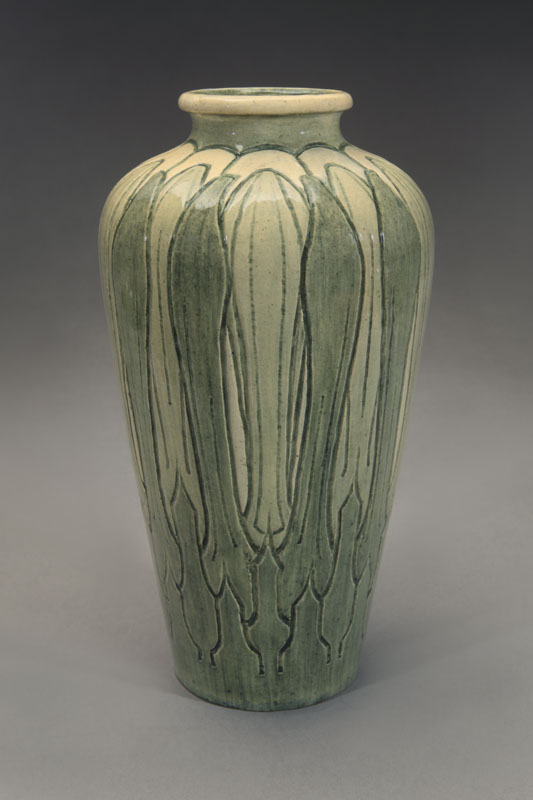
The second greatest area of concentration in NOMA’s Decorative Arts collection is American art pottery from circa 1880 to 1960, with notable strengths in the areas of Newcomb, Rookwood and Fulper Pottery. The collection numbers about 800 examples representing the production of American art pottery from coast to coast.
The Decorative Arts Department of the New Orleans Museum of Art is the largest division of the permanent collection, with more than 15,000 works of art. The collection ranges from antiquity to the present and from a myriad of cultures and continents.
Glass
The single greatest departmental strength is that of glass. The glass collection is ranked among the top five in The United States and covers the history of the glassmaker’s art from its ancient Egyptian origins through contemporary studio glass. The NOMA glass collection presently numbers about 12,000 objects.
American Art Pottery
The second greatest area of concentration is American art pottery from circa 1880 to 1960, with notable strengths in the areas of Newcomb, Rookwood and Fulper Pottery. The collection numbers about 800 examples representing the production of American art pottery from coast to coast.
French Ceramics
French ceramics is another pillar of NOMA’s collection, with a major emphasis on the porcelains of Paris from circa 1770 to circa 1870. The Paris porcelain collection at NOMA is the only one in the United States to survey the entire century-long history of these distinguished wares. Three areas of secondary concentration within the category of French ceramics are the Brooke Hayward Duchin Collection of nineteenth-century Palissy wares, Sévres porcelain of the eighteenth through the early twentieth century, and the Stern Collection of porcelain veilleuses which is focused upon the nineteenth century.
Portrait-Miniatures
Another important area is English and Continental portrait-miniatures. The bulk of that collection consists of the notable group in the Latter-Schlesinger Collection of over two hundred examples, dating from the sixteenth to the late nineteenth century.
Fabergé
One of the most popular areas of NOMA’s collection, the Fabergé installation includes, but is not limited to, Fabergé Easter Eggs, a box in the form of an Easter egg, a pink clock set with peals that was owned by the last Tsarina of Russia, a Bismark Box laden with 90 carats of diamonds, an Imperial Horse Guard helmet, cigarette and card cases, clocks, inkwells, letter knives, glue pots, photograph frames and stamp viewers.
Furniture and More
Other facets of the Decorative Arts at the New Orleans Museum of Art include 18th century and 19th century American furniture; English ceramics, including the distinguished Irving Gerson Collection of Wedgwood, and the Geraldine Colby Zeiler Collection of Belleek porcelain; the H. Lloyd Hawkins, Jr. Collection of Meissen porcelain figures, the Elinor Bright Richardson collection of English silver, which features works by the great Paul Storr; and the Gross Collection of English silver covering works from the seventeenth through the nineteenth century. Museum publications are available through the Museum Shop on the Latter-Schlesinger Collection of portrait-miniatures, American art pottery, Paris porcelains, the Hayward Duchin Collection of Palissy wares, the Gerson Collection of Wedgwood, the Bright Richardson Collection of silver and Fabergé masterworks from the Matilda Geddings Gray Foundation Collection.
Modern and Contemporary
Modern European Art Modern & Contemporary American Art
Highlights of NOMA’s European modern paintings include outstanding examples of the important art movements of the 20th Century: Fauvism, Cubism, Die Brücke, Blaue Reiter, School of Paris, Surrealism and l’art brut.
Fauvism burst onto the Paris art scene with the 1905 Salon d’Automne. The artists were dubbed fauves, or “wild beasts” for their bold, subjective use of color. Kees van Dongen, one of the original Fauves, is represented with his work Woman in a Green Hat. NOMA’s collection of works from the Fauvist movement also includes Maurice de Vlaminck’s The Seine, André Derain’s Landscape at Cassis, and Georges Braque’s Landscape, l’Estaque. Braque, along with Picasso, was one of the most important figures in the development of 20th Century art because of his role as a founder of the Cubist movement in 1908, shortly after he completed Landscape, l’Estaque.
Pablo Picasso’s work is characterized by continuous radical change. After his Blue and Rose periods of 1901-1907, Picasso joined with Braque in developing the wholly new artistic style called Cubism. He once stated, “I am always a Cubist,” but Picasso never ceased to explore the expand the pictorial possibilities that emerged in the Cubist Revolution. Later, Picasso merged political and psychological tension and anguish into much of his work.
The Cubism movement is also evidenced in sculpture, such as Jacques Lipchitz’s Bather, which allows the exploration of cubism from all sides and angles.
Amedeo Modigliani was the epitome of the bohemian, left-bank artist of the School of Paris, enjoying the city’s cafés and nightlife. His controlled design and individually mannerist mode was unique in the Parisian art world of the day, which was largely preoccupied with Fauvism and Cubism.
Ernst Ludwig Kirchner was a founding and dominant figure of Die Brücke, or The Bridge, a group of German Expressionist artists who put great emphasis upon the instinctive, spontaneous and subjective. Die Brücke artists expressed their strong emotional attitudes toward their subject matter in a forceful style.
Wassily Kandinsky was the initial practitioner of non-objective art and a founding member of Blaue Reiter [Blue Rider], the second Expressionist group movement in Germany. Kandinsky’s Search for Several Circles demonstrated his fascination for the circle, the form which he believed “points most clearly to the Fourth Dimension.”
Henri Matisse was another giant of 20th Century art, ranking with Picasso in the quality and quantity of his production. Paintings, sculptures, drawings, prints, and papier découpés, works using paper cut-outs which Matisse called “drawing with scissors.” The work Jazz is from one of his eight illustrated books which rank among his most outstanding achievements.
The Surrealist Movement is well-represented in NOMA’s collection by such works as Max Ernst’s Gulf Stream, with his signature creative rubbing techniques, Joan Miró‘s Portrait of a Young Girl, and René Magritte’s Witty Fantasy, The Art of Conversation.
Jean Dubuffet’s art fits into no particular school or movement, and continually challenges the traditional aesthetic of the beautiful. Dubuffet came to create what he called l’art brut, or “raw art,” in which ordinary and banal subjects are exploited to shock the viewer out of accepted aesthetic responses.
NOMA’s collection of American Modern and Contemporary art ranges from the Impressionism of Mary Cassatt to the modernism of Georgia O’Keeffe, from the Abstract Expressionism of Jackson Pollock to the dynamic and varied work of contemporary artists. Also noteworthy is the Museum’s Photography Collection, Prints and Drawings Collection, and the planned Sydney and Walda Besthoff Sculpture Garden which encompass many 20th Century treasures.
Among the visionary and generous donors who have contributed fine art to NOMA’s 20th Century collections, in addition to the Besthoff Family, are Mrs. P. Roussel Norman, the late Muriel Bultman Francis, the late Victor K. Kiam, and the Frederick R. Weisman Foundation.
Georgia O’Keeffe developed a highly individualistic style in her paintings of sprawling desert landscapes and unfolding flowers. Her work is distinguished by her ability to distill the essence of natural forms through the use of simplification and soft color.
Marsden Hartley experimented with the range of European art movements from Post-Impressionism to Cubism to German Expressionism. In The Ice Hole, Maine, Hartley uses a stitch-like brushstroke influenced by the Post-Impressionist Swiss painter, Giovanni Segantini.
Ralston Crawford was a notable participant in the development of American modernism. His work, based upon observation, emphasized the two-dimensionality of the canvas and demonstrated the balance, indeed tension, between abstraction and representation.
Jackson Pollock was the most famous Abstract Expressionist or “action painter” of his generation, exerting a tremendous influence in the New York art world. Pollock is known for drizzling and flinging different kinds of paint, the work of art being created through the action of his own body movements.
Joseph Cornell is an enigmatic figure in 20th Century art. He lived an almost hermetic life but created miniature, magical assemblages inspired by Surrealist concepts of poetry. Radar Astronomy is one of Cornell’s several boxes on the theme of space.
Milton Avery, who began his career as a commercial artist, is known for both the style and highly personal content of his work. He is considered, along with O’Keeffe and Hartley, to have forged an indigenous modern American artistic idiom.
Robert Gordy, one of the Louisiana artists who achieved national prominence during the 1970s, featured abstracted female figures in a two-dimensional, decorative landscape in many of his pieces. Gordy is also known for integrating positive and negative space in a pattern within each of his works.
NOMA’s collection of 20th Century European and American painting and sculpture is comprehensive and covers virtually all the major art movements on both continents for the past 100 years.
Asian Art
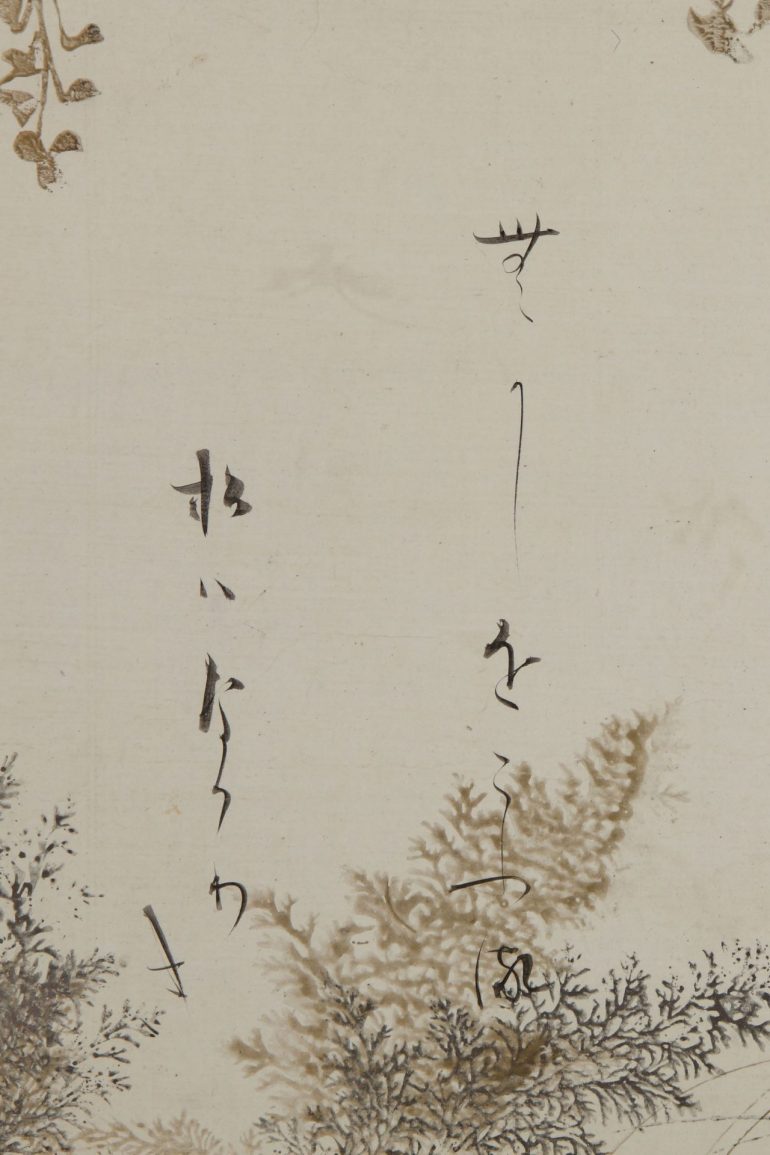
NOMA’s Japanese collection includes three hundred Japanese screen and scroll paintings dating from the Edo period (1615-1868) into the early 20th Century. Of special significance are numerous paintings in the Nanga, Maruyama-Shijo, Rimpa and Zen traditions of Edo painting, including such masters as Ike Taiga, Matsumura Goshun, Hon’ami Koetsu and Hakuin Ekaku.
The Museum’s collection of Chinese ceramic art includes examples from the Neolithic to the end of the imperial era, exploring the earthenware, stoneware and porcelain traditions in China. Highlights in this rich collection include a fine selection of Song ceramics and an outstanding collection of blue and white wares from the Yongzheng and Qianlong eras of the Qing dynasty. Enameled wares, including those intended for export, comprise another important aspect of NOMA’s collection.
The arts of India represent NOMA’s newest area of collecting. The Museum houses a significant and growing collection of the tribal and village arts of India, particularly those from the Khond tribes and arts from the Karnataka region. The tradition of appeasing local deities in the Karnataka region, known as Bhutas, result in the creation of large bronze masks and breastplates, and the carving of large wooden statues for the local temples, and are a highlight of NOMA’s Indian collection.
The Asian Art collection at the New Orleans Museum of Art is one of the most distinguished in the Gulf South. The richness, variety and breadth of the arts of China, Japan and India are showcased in the Museum’s renowned holdings. The collection includes objects which range in date from the Neolithic to the contemporary, and include screens and scroll paintings, miniatures, calligraphy, woodblock prints, ceramics, bronzes, jades, and the decorative arts of East Asia and the Indian sub-continent.
The New Orleans Museum of Art has collected the arts of Asia almost since the inception of the institution. In 1914, the bequest of a large collection of Chinese jade and hardstone carvings from the Morgan-Whitney family marked the first donation of a collection to the new institution, and marked an auspicious beginning to NOMA’s collection of Asian art. Since that time the Museum has focused primarily on the collection of Chinese ceramics, Japanese Edo-period painting, and the sculptural art of India.
Louisiana Art
19th Century 1900 - 1945 Contemporary
With the Louisiana Purchase in 1803 and statehood in 1812, Louisiana formally became a part of the emerging American republic. Many Louisiana natives however, still considered themselves part of the earlier French and Spanish cultures, beginning the evolution of the American-European hybridization of Louisiana culture.
Portraiture dominated Louisiana painting in the first half of the 19th century. Unlike the aristocratic 18th century portraits, portraits in the 19th century reflect the more bourgeois appearance of the burgeoning middle class – proper but not ostentatious. The demand for portraits grew with the increasing antebellum prosperity, and artists flocked to the area to seek their fortunes. Many of these import artists travelled from Europe, especially France, due to the long-standing ties between that country and Louisiana. Two of the most successful and talented were Jacques Amans and Jean Joseph Vaudechamp, and their restrained neo-classic style of French art became popular with Louisiana patrons and artists alike.
Another influence on the character of Louisiana culture was that of the indigenous population. Indian ideas were an indispensable source for early settlers trying to adapt to the region, and this assimilation was mutual, as illustrated by Alfred Boisseau’s Indians Walking Along the Bayou. A hybridization of culture can be seen in this work, for the child carries Indian implements, the man carries an American rifle, and the clothing is Indian in style but cut from European or American fabrics.
Public interest in art waned mid-century as epidemics and the economic depression caused by the Civil War and Reconstruction strangled New Orleans. In the last quarter of the 19th century, however, New Orleans became the visual arts center of the “New South” as both formal and informal arts organizations flourished and provided a cohesive climate for artistic creation. Portraiture’s predominance was gradually supplanted by landscape and genre painting. The technological advances and increasing popularity of photography were also a factor in the declining demand for more expensive painted portraits.
The popularity of landscape painting was encouraged by the young nation’s westward expansion and interest in previously unknown vistas and natural wonders. Louisiana artists, beginning with Richard Clague, developed an indigenous school of landscape painting that combined “luminosity” with a simple and direct pictorial naturalism.
The work of Achille Perelli and George Viavant illustrates the unusual contribution Southern artists made to the tradition of still-life painting. Images of dead game and fish, characterized by extremely precise tromp l’oeil (fool-the-eye) detail and vivid coloration, became a staple of late 19th century academic painting in New Orleans. This tradition had become popular prior to the Civil War and remained so, valued as trophies by sportsmen and as souvenirs by tourists.
The most compelling genre subjects were those events that took place along the banks of the Mississippi River. Because their character is primarily narrative, these scenes are not marked by a strong stylistic identity. However, the general development in painting at this time was towards looser, more fluid brushwork and a brighter palette. In depicting the waterways, the land and its inhabitants, 19th century Louisiana artists further refined the concept of the South as a clearly identifiable entity in American life. This concept would come to concern artists more and more in the early twentieth century.
In the early 20th century, Louisiana artists continued to define the character of the South and develop a Southern aesthetic. Earlier generations of artists, believing the South was isolated and unique, retreated to romanticism and nostalgia. Later generations, however, welcomed the inevitable changes of modern forces. Establishing contact with other regions, these artists explored the issue of a Southern aesthetic in a larger, less provincial context.
Many Louisiana artists continued to favor landscape painting but no one genre dominated. Indeed, creative options were expanded by the establishment in 1890 of the Newcomb College School of Art. Its pottery and crafts enterprise intended to provide employment for women at a time when they had few opportunities in the commercial world.
The most influential figures in Southern art at this time were the Woodward brothers, William and Ellsworth. Although born in Massachusetts, the Woodward brothers made New Orleans their home and devoted themselves to promoting Southern culture and art – as artists, teachers and administrators. Ellsworth Woodward was the first Dean of the Newcomb School of Art and a founding trustee of the Isaac Delgado Museum of Art [now NOMA].
During this period, Southern artists practiced a variety of styles ranging from the most conservative to the most experimental. The landscapes that remained popular illustrate the American version of Impressionism. William Woodward’s paintings embody this so-called “genteel” Impressionism which retains the exuberant brushwork and vibrant colors of French Impressionism, but is tamer and more low-keyed with decorative overtones.
International and frequently controversial avant-garde art movements were introduced to New Orleans by the Arts and Crafts Club, founded in 1921. Through the organization, Southern artists were kept abreast of the struggle between representation and abstraction occupying the larger art world. This conflict is manifest in the work of Will Henry Stevens, a professor at Newcomb College, whose paintings may be divided into two distinct categories: representative landscapes bearing the structural influence of Paul Cézanne and color/form abstractions recalling the work of Wassily Kandinsky and Paul Klee.
Modern and contemporary Louisiana artists continued the area’s rich and diverse arts tradition. John McCrady, who came to be aligned with the Regionalist art movement during his early career, returned to his Louisiana roots and found the subject of African-American life in the South to be of particular interest. McCrady later established an art school in New Orleans’ French Quarter and trained many of the next generation of artists. During the 1950s, New Orleans-born Fritz Bultman exhibited regularly with the New York School of noted Abstract Expressionists. A number of contemporary artists living and working in Louisiana during the 1970s achieved national prominence, including Robert Gordy, Ida Kohlmeyer and Jim Richard. Important figures who are still active include Lin Emery, known for metal kinetic sculptures, and John Scott, whose works often refer to his African-American heritage and to the strong musical culture of New Orleans. A popular favorite in the Contemporary Louisiana galleries is a painting from George Rodrigue’s Blue Dog series.
From its earliest exploration and settlement by the French and Spanish, to its strategic location and commercial importance over many centuries, Louisiana has been a significant center for culture and the arts. New Orleans was already a thriving art center by 1910 when Isaac Delgado, a successful sugar broker, offered funds to the city to be used for the creation of “a temple of art for rich and poor alike.” The city had a community of art enthusiasts, so Delgado’s offer was met with great enthusiasm. The Isaac Delgado Museum of Art, later to become the New Orleans Museum of Art, was completed in 1911.
NOMA’s collection includes an outstanding survey of Louisiana art from the 19th and 20th centuries, and includes important works by contemporary artists. The art communities of New Orleans and Louisiana continue to flourish, and many of NOMA’s treasured artworks have been donated to the Museum by generous Louisiana individuals and families.
African Art
The NOMA collection of tribal arts from sub-Saharan Africa is considered one of the most important half-dozen collections of its type in American art museums. NOMA’s commitment to collecting African art is half a century old, dating back to 1953. During the past thirty years, NOMA has made a concentrated effort to develop a comprehensive collection of African art.
The most significant donation to NOMA’s collection was a group of 140 African works bequeathed in 1977 by New York collector Victor K. Kiam. Many of these sculptures, superb examples of their particular type, made NOMA’s holdings one of the strongest in the United States. Since this milestone event, NOMA has continued to expand the African collection through purchases, gifts and additional bequests.
The collection contains in-depth strengths of the major art-producing peoples such as the Bamana, Dogon, Baule, Yoruba, Fang, Tabwa, Luba, Bembe and Chokwe. Among the Yoruba objects are three rare sculptures by the great carver, Olowe of Ise, and two by Areogun of Osi-Ilorin. Also notable is an 18th century shrine figure of Onile, one of seven extant large bronzes from the Ogboni Society.
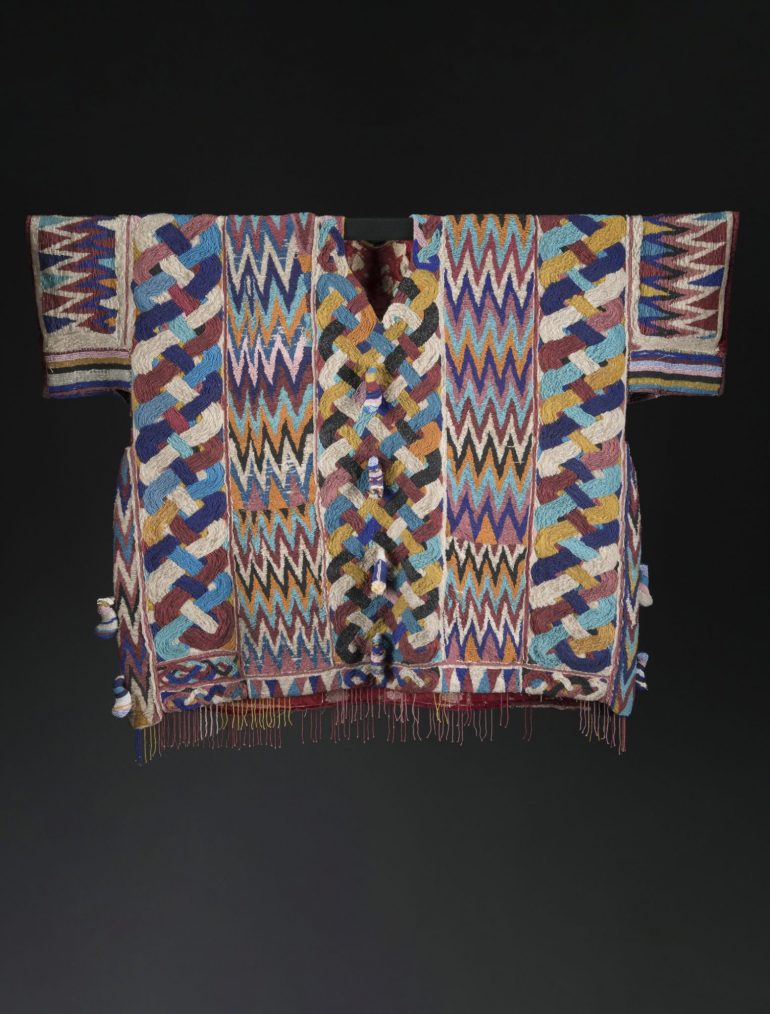
The collection also boasts valuable ancient terracottas from the kingdoms and cultures of Nok, Sokoto, Benin, Akan, Djenne and Bankoni and exquisitely carved architectural elements from the Yoruba, Dogon, Bamana, Fang peoples and the Kedjom-Keku and Benin Kingdoms. The collection contains masks, figures (reliquary, shrine, ancestor, initiation), textiles, storage and utility vessels, prestige objects, furniture, costumes, marionettes, jewelry and musical instruments made of a fascinating variety of materials including wood, ivory, stone, terracotta, cloth, beadwork and various metals, including gold.
In 2011, NOMA published a comprehensive book of the museum’s permanent African collection called Ancestors of Congo Square: African Art in the New Orleans Museum of Art which is celebrates NOMA’s prestigious collection and offers new scholarship from 50 of the leading experts around the world. The book available in the Museum Shop.
Photography
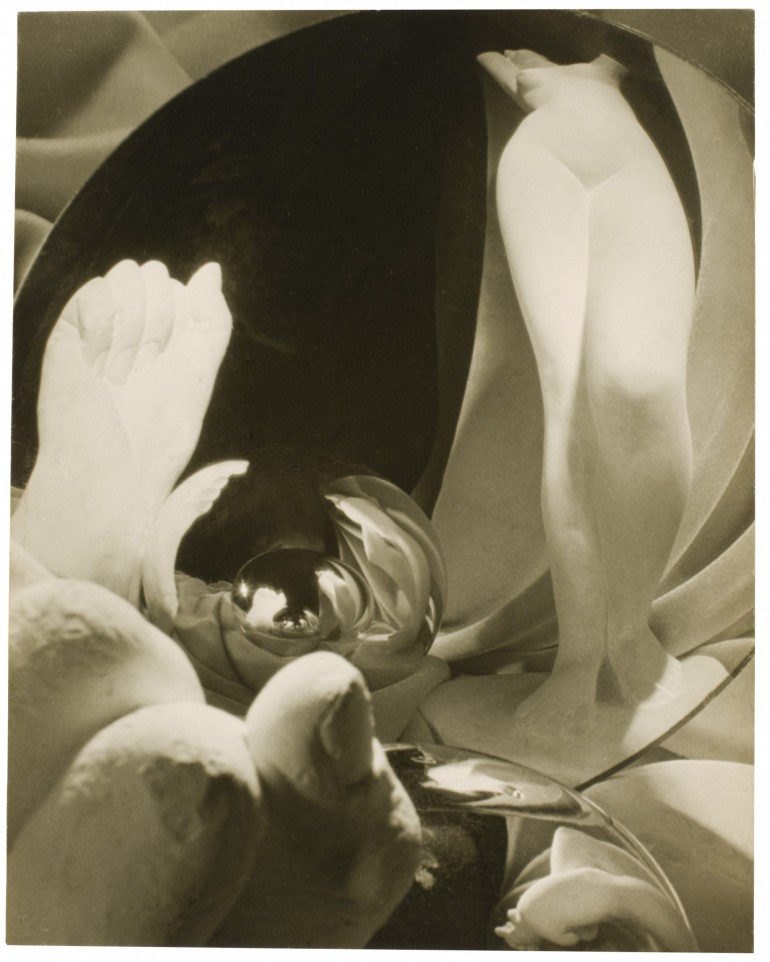
Since the 1970s, NOMA has built an extensive collection of photographs that represents a wide range of achievement in that medium from the 1840s to the present. Today the collection comprises over 8,500 works with images by some of the most significant photographic artists including Berenice Abbott, Ansel Adams, Diane Arbus, Ilse Bing, William Eggleston, and Edward Steichen, among many others.
The collection includes examples that reflect photography’s international scope, from an 1843 view from his hotel window in Paris by William Henry Fox Talbot to a view of Mount Fuji by Kusakabi Kimbei, but it is particularly strong in work about New Orleans by regional and national photographers such as E. J. Bellocq, Walker Evans, Clarence John Laughlin, and Robert Polidori.
NOMA is dedicated to presenting the photography collection in exhibitions, publications and educational programs and to continuing to build the collection to better reflect recent scholarship on the history of photography. Russell Lord, Freeman Family Curator of Photographs is responsible for the care, development, and interpretation of the collection.
Oceanic Art
The New Orleans Museum of Art’s collection of tribal arts from Oceania focuses on art works from Polynesia, Melanesia and Indonesia.
Polynesia
The connection features an 18th Century temple figure collected by Captain James Cook on his third voyage to the Hawaiian Islands in 1779. The primary function of the temple figure was to protect sacred precincts and, therefore, they are made to appear aggressive, even threatening. The tall, complex headdress, carved in a series of knobular projections, surmounts the figure.
Other notable works in the Polynesian collection include a nephrite pendant [hei tiki] from the Maori peoples of New Zealand, an Easter Island wood standing male figure [moai kava kava], a Samoan Island wood club and a Fiji Island whale tooth necklace [vuaseisei]. From the Marquesas Islands, Fatu Hiva, is a wood standing male figure and two bone toggle switches [ivi po’o].
Melanesia
The greatest concentration of significant art produced in the South Pacific Islands is found on Papua New Guinea, particularly in the Sepik, Yuat, Karawari and Ramu River regions. The fact that approximately 800 different languages are spoken by the three million people living in the area leads to a constant state of tribal warfare. As a result of the complexity of interrelationships between these various cultures, it is often easier to sort and identify their artistic endeavors by geographic region instead of by individual tribal names.
Indonesia
The Batak, consisting of six ethnic groups numbering three million, live in the mountainous highlands of Northern Sumatra, isolated by rugged, deep river gorges and impenetrable forests. This detachment from outside influences has kept their culture relatively pure for centuries, but over the years, Christianity, Islam, and Dutch colonialism have made inroads upon the Batak.
Influential in Karo Batak society are magician-priests, called guru, who have extensive knowledge of the ancient religion and can perform a variety of useful practices and rituals. During their professional duties, the guru often use magic wands made of a tall bamboo or wood staff surmounted with single or multiple figures. It is believed that the magical powers of these wands include the ability to ward off evil, make rain, cause death, and guarantee the fertility of crops, animals and humans. NOMA’s collection of Batak artifacts also include a shell and brass necklace and a large wood helmet mask.
Other fascinating objects in the collection include a fine cotton ritual weaving [tampan] from Sumatra, a 19th century bone carve weaver’s pick from the Dyak peoples of Borneois, a Lombok betal nut pestle and a seated male ancestor figure [adu] from the Nias Islands.
Art of the Americas
United States of America Native America Latin America
The New Orleans Museum of Art’s permanent collection includes noteworthy works by American artists from the 18th Century to the present day. John Singleton Copley, represented at NOMA by his Portrait of Colonel George Watson, was the most skilled artist practicing in the American colonies before the Revolution. Benjamin West, a trend-setter in the late 18th and early 19th Centuries, forecast both the Neo-Classic and Romantic movements in his paintings. Renowned portrait artists Charles Willson Peale, Thomas Sully and Gilbert Stuart are also represented with important works. A highlight of the collection is John Singer Sargent’s elegant Portrait of Mrs. Asher Wertheimer, painted in 1898.
NOMA’s collection of 20th century American art ranges from the Impressionism of Mary Cassatt to the modernism of Georgia O’Keeffe, from the Abstract Expressionism of Jackson Pollock to the dynamic and varied work of contemporary artists.
The Southwestern United States has been the homeland of indigenous peoples for more than 10,000 years. Over the millennia, drastic changes occurred in the natural environment, producing the semi-arid desert and mountainous terrain we know today. Important innovations introduced from Mexico made life in the harsh environment easier, particularly agriculture, weaving and ceramics.
By 1000 A.D., the population had increased and migrated to ceremonial and administrative centers where ambitious agricultural and building projects were focused. Painted pottery for ceremonial as well as utilitarian use became an important and abundant aesthetic medium. These great builders and artists are now commonly referred to as the Anasazi culture.
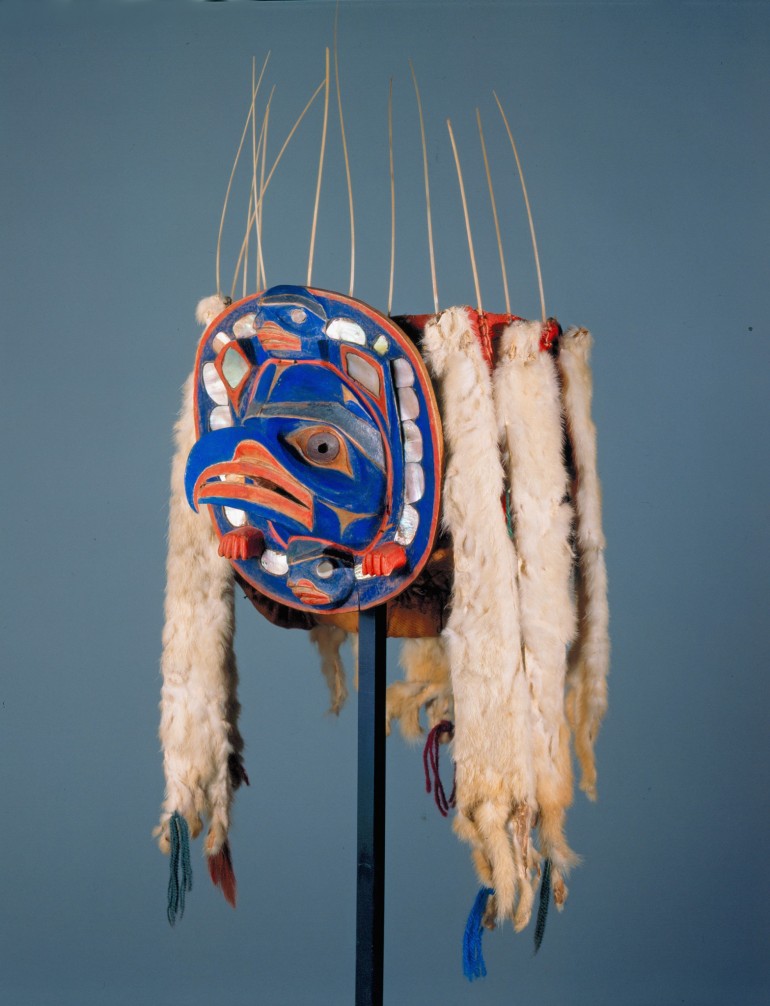
NOMA’s collection includes many fine examples of Native American art works from the Anasazi era through contemporary Pueblo peoples who are their descendants and the Northwestern Coast peoples of British Columbia.
pre-Columbian America
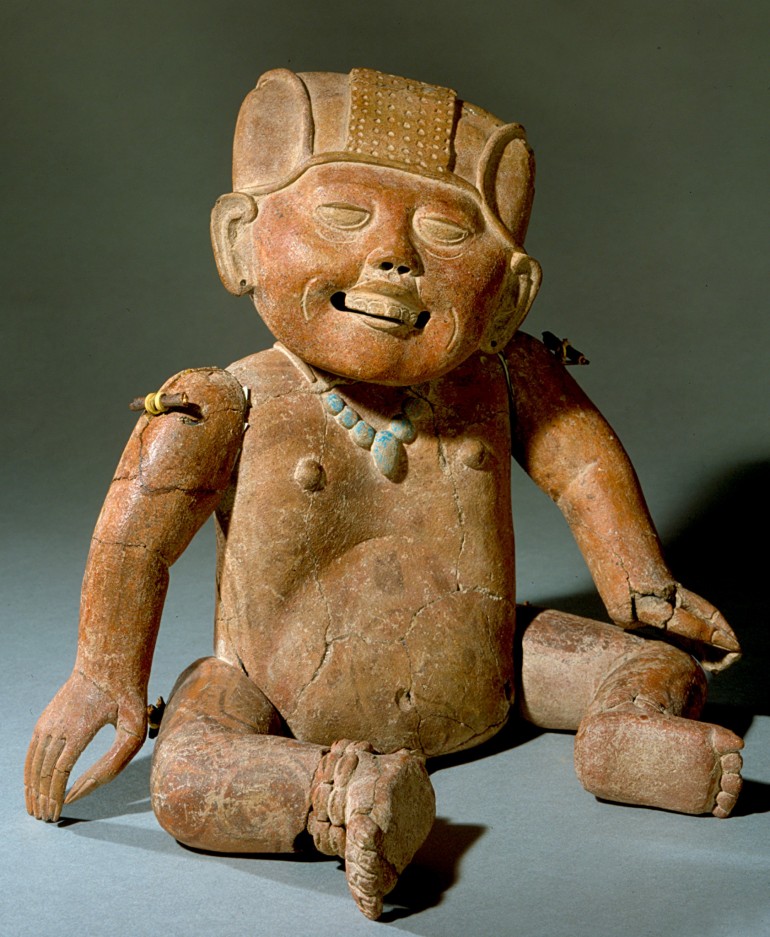
“pre-Columbian” refers to the many cultures that existed in the Americas from Mexico to Peru before the Spanish conquest in 1521. Highlighting the cultures of West Mexico, the Maya region, and Central America, the Museum’s collection introduces the viewer to the splendour and diversity of pre-Columbian artistic expression.
The varied environmental zones of Mesoamerica gave rise to numerous and diverse civilizations. Underlying this diversity, however, was a shared cultural co-tradition spread through trade and inter-colonization. Included in this common tradition were an accurate astronomical calendar, various religious and political concepts, and architectural and artistic trends.
Ceramic and stone sculptures seem most frequent, but painting, fresco, textile and metallurgy were all highly refined. The various pre-Columbian cultures all created objects with ritual or funerary purpose.
Spanish Colonial
In 1532, Francisco Pizzaro and his Spanish conquistadors captured the emperor of the Inca, Atahualpa, and initiated three centuries of Spanish colonization in South America. The Spanish conquest wrought enormous devastation on the indigenous cultures. However, a new and unique culture emerged which integrated elements from both the new and old world civilizations.
The concentration of secular and ecclesiastical powers in the cities of Lima, Cuzco, Bogotá and Quito encouraged their development as artistic centers. While these cities were quite Europeanized, the art they produced exhibits an inventive blend of aesthetic patterns reflecting the mestizo [mixed] Spanish and Indian character that developed in South America. In general, Spanish Colonial art has a highly ornate, glittering appearance achieved with elaborate gold stenciling and gold leaf. Jeweled ornaments were often affixed to the surface of the painting.
A fascinating code of imagery arose from the Catholic Church’s use of art to interpret religious doctrine for the native civilizations. The partnership between the Church and the Spanish State fell victim to the revolutions of the 19th century, however, and with the end of the colonial period also came the demise of the colonial art tradition.
The New Orleans Museum of Art has developed a unique Arts of the Americas collection, surveying the cultural heritage of North, Central and South America. The Latin American collection ranges from the pre-Columbian period through the Spanish Colonial era and is especially rich in objects from the great Mayan culture of Mexico and Central America, and in painting and sculpture from Cuzco, the fabulous Spanish capital of Peru. The Native American collection includes works of art from the ancient Anasazi peoples to Indian artists and artisans still working today. NOMA’s collection of art from the United States provides a fascinating overview of the nation’s cultural history in paintings, decorative arts, and sculpture from the 18th century to the present day.